Understanding the difference between intermittent fasting and calorie counting for beginners was something I wish I’d done before spending six frustrated months bouncing between both. I started with calorie counting, switched to fasting, went back, then finally figured out which one actually fit my life. If you’re standing at that same crossroads right now, feeling overwhelmed by conflicting advice, I wrote this so you don’t have to waste the time I did.
What Calorie Counting Actually Looks Like Day to Day
Calorie counting sounds simple on paper. You figure out how many calories your body needs, then eat less than that number. Done. Except it’s never that clean in practice.
When I started, I downloaded MyFitnessPal and logged everything. And I mean everything. That splash of olive oil in the pan. The handful of almonds at 3 PM. The creamer in my coffee. Within a week, I realized I’d been underestimating my intake by about 400 to 500 calories a day, which honestly shocked me.
The good news is that calorie counting gives you real data. You stop guessing. You learn portion sizes in a way that sticks with you even after you stop tracking. I still know that a tablespoon of peanut butter is roughly 95 calories because I logged it so many times it’s burned into my brain.
The hard part is the mental load. You’re essentially doing math before every meal. Eating out becomes a research project. Cooking dinner for your family turns into a weighing and measuring session. Some people thrive on that structure. I found it exhausting after about three months, but those three months taught me more about food than the previous decade had.

What Intermittent Fasting Actually Looks Like Day to Day
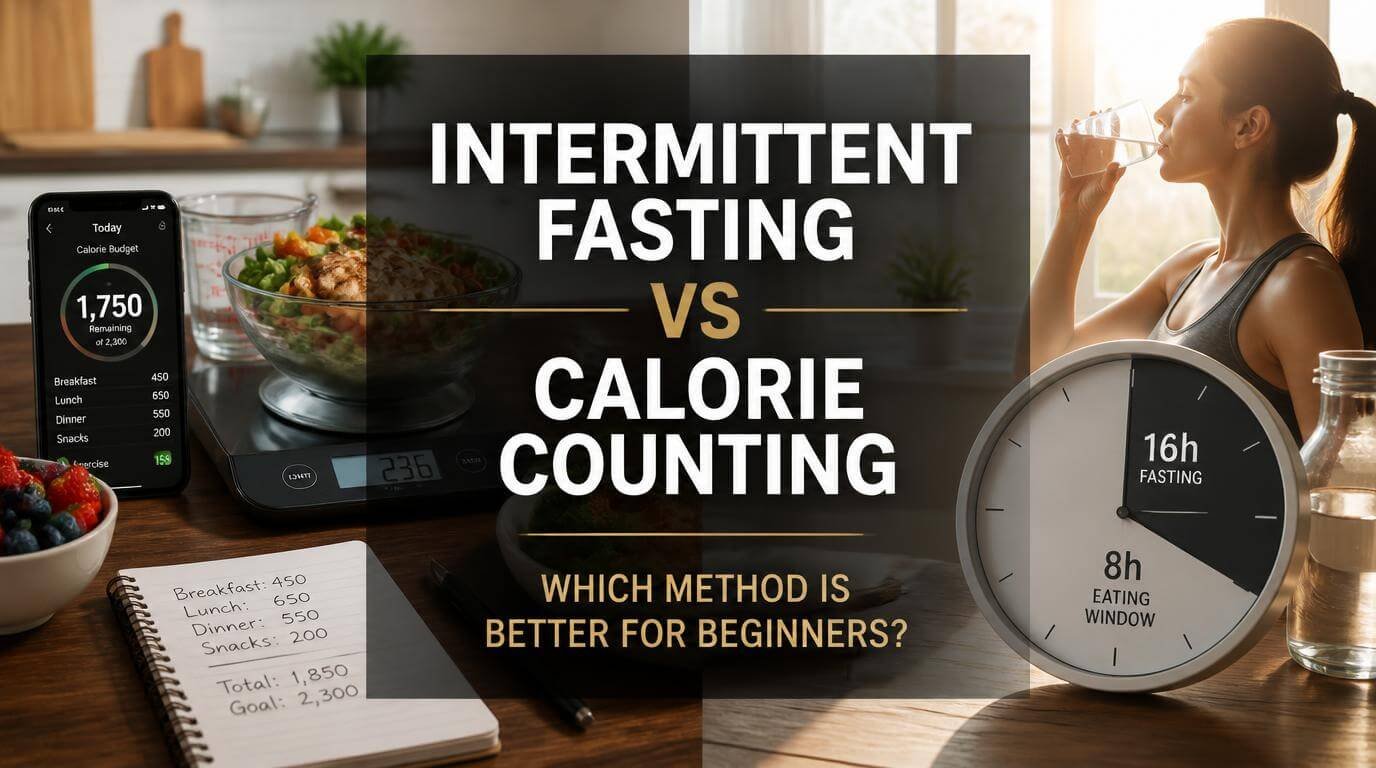
Intermittent fasting flips the script entirely. Instead of worrying about what you eat, you focus on when you eat. The most common approach for beginners is the 16:8 method, where you fast for 16 hours and eat during an 8-hour window.
For me, that meant skipping breakfast, eating my first meal around noon, and finishing dinner by 8 PM. The first three days were rough. I woke up hungry, grumpy, and convinced this was a terrible idea. By day five, something shifted. My body adjusted. Morning hunger faded, and I actually felt sharper and more focused before my first meal.
The simplicity is what hooked me. No apps. No food scales. No scanning barcodes at the grocery store. I just looked at the clock. That’s it.
But here’s what nobody tells you: intermittent fasting doesn’t automatically create a calorie deficit. I know people who started 16:8 and gained weight because they crammed 3,000 calories into their eating window. The method only works for weight loss if you naturally eat less during that shorter window, which many people do, but it’s not guaranteed.

The Core Difference Between Intermittent Fasting and Calorie Counting for Beginners
The fundamental difference between intermittent fasting and calorie counting for beginners comes down to what you’re controlling. Calorie counting controls quantity. Fasting controls timing. One asks you to measure. The other asks you to wait.
Calorie counting is precise. You know exactly where you stand numerically every single day. If you ate 1,600 calories and your target was 1,800, you have a clear 200-calorie cushion. That precision is powerful for people who like control and respond well to numbers.
Intermittent fasting is flexible. You don’t track, weigh, or calculate anything. You eat real meals during your window and trust the natural appetite reduction that shorter eating periods tend to create. That flexibility appeals to people who feel suffocated by tracking.
Neither method tells you what to eat. That’s a separate conversation entirely. You can count calories while eating junk food, and you can fast while eating junk food. Both work better when you’re choosing whole, nutrient-dense foods. But the mechanism of action, the daily habit loop, is completely different between the two.
Which One Is Easier to Start?
Honestly, intermittent fasting has a lower barrier to entry. You don’t need to download anything, buy a food scale, or learn how to read nutrition labels with a calculator in hand. You pick an eating window and go.
Calorie counting requires setup. You need to calculate your Total Daily Energy Expenditure (TDEE), choose a calorie target, pick a tracking app like MyFitnessPal or Cronometer, and commit to logging consistently. That first week of setup and learning the ropes can feel overwhelming.
I remember spending 20 minutes trying to log a homemade stir-fry the first time. Each ingredient, the oil, the sauce, the rice, everything needed a separate entry. Meanwhile, a friend of mine just started skipping breakfast and was already a week into intermittent fasting before I’d even calibrated my tracker.
That said, “easier to start” doesn’t mean “easier to sustain.” Starting intermittent fasting is simple. Getting through that first week of hunger pangs and headaches while your body adjusts requires real willpower. Calorie counting is harder to set up but often feels more sustainable once the habit is in place because you’re never actually hungry, you’re just eating controlled amounts throughout the day.
Which One Gets Better Results?
This is where people get heated, and I get it. Everyone wants a winner. But the honest answer from both research and my own experience is: they produce roughly similar weight loss results when followed consistently.
A 2022 study published in the New England Journal of Medicine compared time-restricted eating to standard calorie restriction over 12 months. Both groups lost weight. Neither group lost significantly more than the other. Consistency was the deciding factor, not the method.
What I noticed personally was that calorie counting gave me faster initial results because I had precise control. I could see exactly why I lost 1.5 pounds that week. With fasting, the results came more gradually, but I stuck with it longer because the daily effort felt lighter.
The best results come from whichever method you’ll actually follow for more than six weeks. That’s the unsexy truth nobody wants to hear, but it’s real.
Where Calorie Counting Wins
Calorie counting shines in a few specific situations that fasting simply can’t match.
If you have specific body composition goals, like building muscle while losing fat, you need calorie and macro precision. Intermittent fasting alone won’t tell you if you’re hitting 150 grams of protein a day. Apps like MacroFactor or MyFitnessPal give you that granular control.
It’s also better for people with irregular schedules. Shift workers, new parents, and frequent travelers often can’t stick to a consistent eating window. Calorie counting works no matter when you eat, whether that’s 6 AM or midnight.
And for people who genuinely enjoy cooking and food, calorie counting lets you eat whenever you want. You don’t skip meals. You don’t watch the clock. You just eat within your budget. I know a few people who actually find the tracking process satisfying, almost like a puzzle they enjoy solving every day.

Where Intermittent Fasting Wins
Fasting has its own strengths, and they’re significant for the right person.
If you hate tracking and measuring, intermittent fasting removes that entire burden. There’s a real psychological relief in just eating normal meals without logging every bite. For people who’ve struggled with obsessive food tracking or disordered eating patterns triggered by calorie counting, fasting can feel like freedom.
It’s also incredibly practical for busy people. I work from home, and on fasting days, my mornings became productive in a way they never were when I was making and eating breakfast. That sounds minor, but over weeks, those extra focused morning hours added up.
The potential metabolic benefits are worth mentioning too. Research on intermittent fasting suggests improvements in insulin sensitivity, reduced inflammation, and better cellular repair through a process called autophagy. Calorie counting doesn’t offer those specific biological perks, even when it produces the same calorie deficit.

Can You Combine Both Methods?
Absolutely, and this is actually what I ended up doing. I use intermittent fasting as my daily framework, eating from noon to 8 PM, and I loosely track calories a few days a week to make sure I’m staying in a reasonable range.
This hybrid approach eliminates the worst parts of both methods. I don’t track obsessively every single day, which keeps me sane. But I check in with the numbers often enough to catch portion creep before it becomes a problem. Portion creep is real, by the way. After a few months of not tracking, my “normal” servings slowly grew about 30% larger without me noticing.
If you’re a beginner trying to understand the difference between intermittent fasting and calorie counting for beginners, know that you’re not locked into one forever. Many experienced people blend the two, and it works beautifully.
Common Mistakes Beginners Make With Each Method
With calorie counting, the biggest mistake is underestimating intake. People forget to log cooking oils, condiments, and drinks. A salad that looks like 300 calories can easily hit 700 once you add dressing, cheese, croutons, and avocado. Weigh your food for at least the first two weeks. You’ll be surprised.
With intermittent fasting, the biggest mistake is overcompensating during the eating window. Your body doesn’t care that you fasted for 16 hours if you eat 3,500 calories in 8. Some beginners treat the eating window like a free-for-all, and the scale doesn’t budge.
Another common error with both methods is ignoring protein. Whether you’re counting or fasting, getting enough protein (roughly 0.7 to 1 gram per pound of body weight) keeps you full, preserves muscle, and makes either approach work dramatically better. I wish someone had drilled this into me from day one.
FAQs
Is intermittent fasting safer than calorie counting for beginners?
Both methods are generally safe for healthy adults. Intermittent fasting can cause headaches and irritability during the first week as your body adjusts. Calorie counting carries a small risk of becoming obsessive for people prone to disordered eating. If you have any medical conditions, especially diabetes, talk to your doctor before starting either one.
How do I know which method fits my lifestyle better?
Think about what annoys you more: tracking food or skipping meals. If logging every bite sounds miserable, try fasting first. If going without food for 16 hours sounds unbearable, calorie counting gives you more eating flexibility. Your daily schedule and personality matter more than any study.
Can I lose the same amount of weight with either approach?
Yes. Research consistently shows that total calorie deficit drives weight loss, not the specific method you use to create it. Both intermittent fasting and calorie counting can produce identical results over time. The one you stick with consistently will always outperform the one you quit after three weeks.
What’s the difference between intermittent fasting and calorie counting for beginners who also exercise?
If you exercise regularly, calorie counting gives you more control over fueling your workouts properly. Fasting can make intense morning workouts feel rough, especially early on. Many people who lift weights prefer counting so they can time protein intake around training sessions for better recovery and muscle growth.
Do I need to buy anything to get started with either method?
Calorie counting works best with a food scale (about $10 to $15 on Amazon) and a free app like MyFitnessPal or Cronometer. Intermittent fasting requires nothing except a clock. Some people like the Zero app to track fasting windows, but it’s completely optional. Neither method requires supplements, special foods, or expensive programs.
Conclusion
Picking between these two methods really comes down to knowing yourself, your habits, your patience level, and what kind of daily friction you’re willing to tolerate. Neither one is objectively better, and the best choice is the one that fits your actual life, not your ideal one. So which one are you leaning toward trying first?