When I first searched for healthy eating tips without cooking skills or kitchen tools, I expected to find a bunch of articles telling me to “just learn to cook.” Thanks for nothing. I was living in a tiny apartment with a mini fridge, one dull knife, and zero motivation to become a home chef. But I still wanted to eat food that didn’t make me feel terrible. Turns out, you absolutely can. I’ve been doing it for years, and honestly, some weeks I still don’t turn on a stove.
1. Build Meals Around Foods That Need Zero Cooking
The produce section is full of stuff that’s ready the second you buy it. Bananas, avocados, tomatoes, cucumbers, bell peppers, berries, spinach, carrots. None of these need heat. They just need a quick rinse.
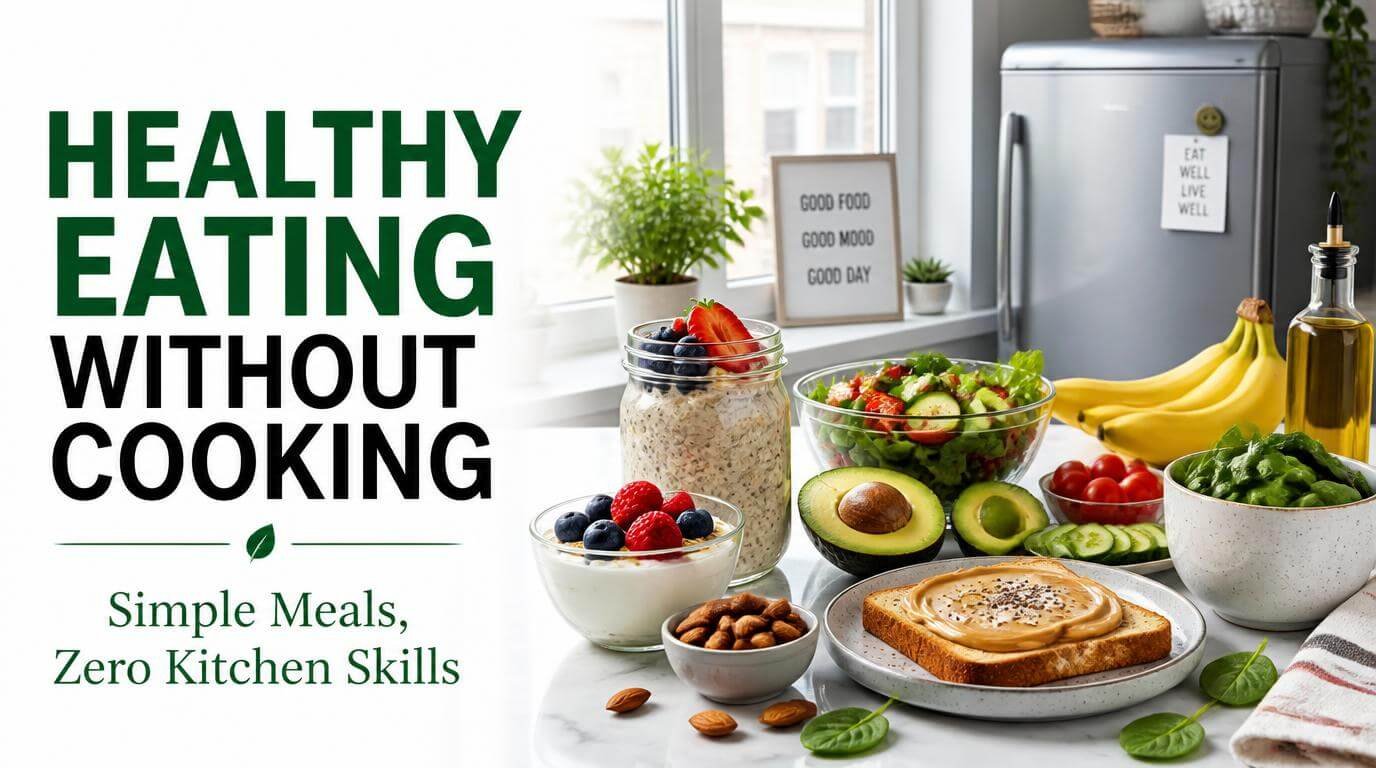
I got into the habit of buying three or four of these every grocery trip and pairing them together on a plate. A sliced avocado with cherry tomatoes and a handful of baby spinach isn’t fancy, but it’s a real meal. Add some hummus or a drizzle of olive oil and you’ve got something that covers your bases nutritionally without touching a pan.

2. Make the Microwave Your Best Friend
People love to trash microwaves, but mine kept me fed and healthy for an entire year in a dorm. You can steam broccoli in a covered bowl with a splash of water in about three minutes. Sweet potatoes cook perfectly in eight to ten minutes if you poke holes in them first.
Frozen vegetables from brands like Green Giant or Birds Eye are already prepped and just need reheating. Throw a bag of frozen mixed veggies in a microwave-safe bowl, heat for four minutes, season with salt, pepper, and a squeeze of lemon. That’s a solid side dish. Pair it with a rotisserie chicken from the grocery store and you’ve built a balanced plate without a single cooking skill.

3. Stock Up on Healthy No-Prep Protein Sources
Protein is usually where people struggle when they don’t cook. But plenty of options exist that require nothing more than opening a package.
Canned tuna and canned salmon are packed with protein and omega-3s. I keep StarKist or Wild Planet cans in my pantry at all times. Pre-cooked chicken strips from the deli section work great tossed into a salad. Hard-boiled eggs come pre-cooked in bags at most grocery stores now. Greek yogurt, especially plain varieties from Fage or Chobani, gives you a solid protein hit with minimal sugar. Cottage cheese is another one I slept on for years before realizing how filling it actually is.
4. Use Pre-Made Salad Kits Strategically
I know salad kits get a bad reputation for being overpriced. And yes, you’re paying a premium for someone else to chop lettuce. But if the alternative is ordering pizza because you don’t feel like prepping, the $4.99 kit wins every time.
Brands like Taylor Farms and Dole make kits that come with dressing, toppings, and crunchy bits all in one bag. My move is to grab one of those, add a can of chickpeas or some deli turkey for protein, and call it dinner. The whole thing takes about ninety seconds to assemble. I’ve eaten this exact meal hundreds of times and I’m genuinely not tired of it yet.
5. Rely on Whole Grain Convenience Foods
Not all packaged food is junk. Whole grain bread, tortillas, instant oatmeal, and rice cups can anchor a meal without any skill whatsoever.
A piece of whole wheat toast with peanut butter and sliced banana is legitimately one of the most nutritious breakfasts you can eat. Minute Rice brown rice cups microwave in sixty seconds and pair well with canned black beans and salsa for a quick burrito bowl. I also keep whole grain crackers like Triscuits around for snacking with cheese and fruit. These are boring suggestions, sure, but boring food that keeps you healthy beats exciting food that doesn’t.
6. Overnight Oats Changed Everything for Me
I’m not exaggerating when I say overnight oats were the single biggest improvement to my eating habits. You literally dump oats in a jar with milk, stir, and put it in the fridge before bed. That’s it. No cooking. No tools beyond a spoon and a container.
My go-to ratio is half a cup of rolled oats, half a cup of milk (I use oat milk, the irony isn’t lost on me), a tablespoon of chia seeds, and a spoonful of peanut butter. In the morning I top it with whatever fruit I have. The texture takes a couple tries to get used to, but once you’re in, you’re in. I’ve made this five mornings a week for over two years.

7. Smart Snacking Beats Skipping Meals
When you don’t cook, the temptation to just skip meals and then binge on chips at 10 PM is real. I lived that cycle for months. The fix wasn’t willpower. It was keeping better snacks within arm’s reach.
Trail mix with actual nuts and dried fruit, not the candy-loaded kind, keeps well and travels anywhere. Apple slices with almond butter take thirty seconds to prepare. String cheese exists for a reason. A handful of raw almonds and a banana can tide you over for hours. The goal isn’t perfection. The goal is having something decent available so you don’t default to gas station food when hunger hits.
8. Healthy Eating Tips Without Cooking Skills or Kitchen Tools for Eating Out
Restaurants and takeout aren’t automatically unhealthy. You just need a few guidelines, and I use these constantly.
At Chipotle, I order a burrito bowl with brown rice, black beans, chicken, fajita veggies, and fresh salsa. Skip the sour cream and cheese, and you’ve got a genuinely nutritious meal for under $10. Subway lets you load up on vegetables for free. Most Asian restaurants offer steamed options if you ask. Even at a fast food place, grilled chicken sandwiches with a side salad beat the fried alternatives without requiring any willpower heroics. The trick is having a default order at three or four places you eat often, so you’re not making decisions when you’re already starving.

9. Read Labels Like They Owe You Money
This one skill replaced actual cooking ability for me. When you buy pre-made food, the nutrition label tells you everything you need to know. I focus on three things: protein content, added sugar, and sodium.
My rule of thumb is simple. I want at least 10 grams of protein per serving in anything I’m calling a meal component. I keep added sugar under 8 grams per serving for non-dessert items. And I try to stay under 600mg sodium per serving, though I’ll flex on that for something like canned soup that’s otherwise solid. Brands like Amy’s, Trader Joe’s, and even some Lean Cuisine options hit decent numbers if you actually check.
10. Prep Without Actually Cooking
You don’t need to meal prep like a fitness influencer with matching containers and a label maker. But spending fifteen minutes on a Sunday washing fruit, portioning out snacks into bags, and hard-boiling a batch of eggs (literally just boiling water, the lowest cooking bar possible) sets you up for the whole week.
I also wash and tear lettuce so it’s ready to grab, portion hummus into small containers, and slice cheese. None of this qualifies as cooking. It’s just organizing food so future-me doesn’t have an excuse to order Uber Eats at midnight. That small effort on Sunday saves me money and keeps my eating reasonably healthy through Friday.
Frequently Asked Questions
Can you actually eat healthy if you never cook at all?
Yes, and I’m living proof. Between raw fruits and vegetables, canned proteins, pre-made salad kits, overnight oats, and smart grocery store picks, you can build a balanced diet. It takes a bit more label reading and grocery planning than cooking from scratch, but it’s completely doable long-term without ever using a stove.
What’s the cheapest way to eat healthy without cooking?
Canned beans, canned tuna, bananas, oats, peanut butter, frozen vegetables, and store-brand Greek yogurt are all budget-friendly and need zero cooking skills. A week of these staples runs me about $30 to $40 depending on the store. Aldi and Trader Joe’s are the best places I’ve found for keeping costs low on no-cook healthy food.
Are there healthy eating tips without cooking skills or kitchen tools that work for weight loss?
Absolutely. Focus on high-protein, low-sugar options like Greek yogurt, canned fish, hard-boiled eggs, and raw vegetables with hummus. Track portions loosely by reading labels. You don’t need to cook elaborate meals to manage calories. The same no-cook principles apply, you just pay a little more attention to serving sizes and cut back on calorie-dense toppings.
What no-cook breakfasts are actually filling?
Overnight oats with chia seeds and peanut butter keep me full for four to five hours. Greek yogurt with granola and berries works too. A whole wheat tortilla with peanut butter and a banana rolled up is another one I rotate in. The key is combining fiber, protein, and a healthy fat so you’re not hungry again in an hour.
Is eating pre-packaged food every day unhealthy?
It depends entirely on what you pick. A pre-made salad kit with added protein is fine daily. Frozen vegetables are nutritionally similar to fresh ones. The risk comes from relying on highly processed options loaded with sodium and preservatives. Read labels, rotate your choices, and mix in raw produce whenever you can.
Conclusion
Eating well has almost nothing to do with being good in a kitchen. It’s really about choosing the right foods and keeping them accessible. What’s your favorite no-cook meal that actually fills you up?