
I spent most of my sophomore year running on coffee and vibes, and my body absolutely hated me for it. Finding low cost hydration tracking methods for busy college students wasn’t something I thought I’d ever Google, but here we are. Headaches between lectures, dry skin in winter, brain fog during exams, it all traced back to one embarrassing truth: I barely drank water. Once I started actually tracking my intake without spending real money, everything shifted. This is what worked for me and what I’ve seen work for friends living that same chaotic campus life.
1. The Rubber Band Method on Your Water Bottle
This is the simplest trick I’ve ever used, and it costs literally nothing. Wrap a few rubber bands around the bottom of your water bottle. Every time you finish a full bottle, move one band to the top.
By the end of the day, you can see exactly how many bottles you finished just by glancing at the bands. I started with five bands and aimed to move all of them up before dinner. It sounds almost too basic, but that visual cue sitting right in your hand during lectures kept me accountable in a way no app notification ever did.

2. Free Hydration Tracking Apps
Your phone is already glued to your hand, so you might as well use it. Apps like WaterMinder, Plant Nanny, and My Water are all free (or have solid free versions) and take about three seconds to log a glass.
Plant Nanny is my personal favorite because it turns hydration into a tiny game. You grow a virtual plant by logging water, and if you forget, the plant starts wilting. Sounds silly, but guilt-tripping yourself with a cartoon succulent is surprisingly effective. Most of these apps also send gentle reminders throughout the day, which is perfect when you’re bouncing between classes and completely forget that water exists.
3. Time-Marked Water Bottles from the Dollar Store
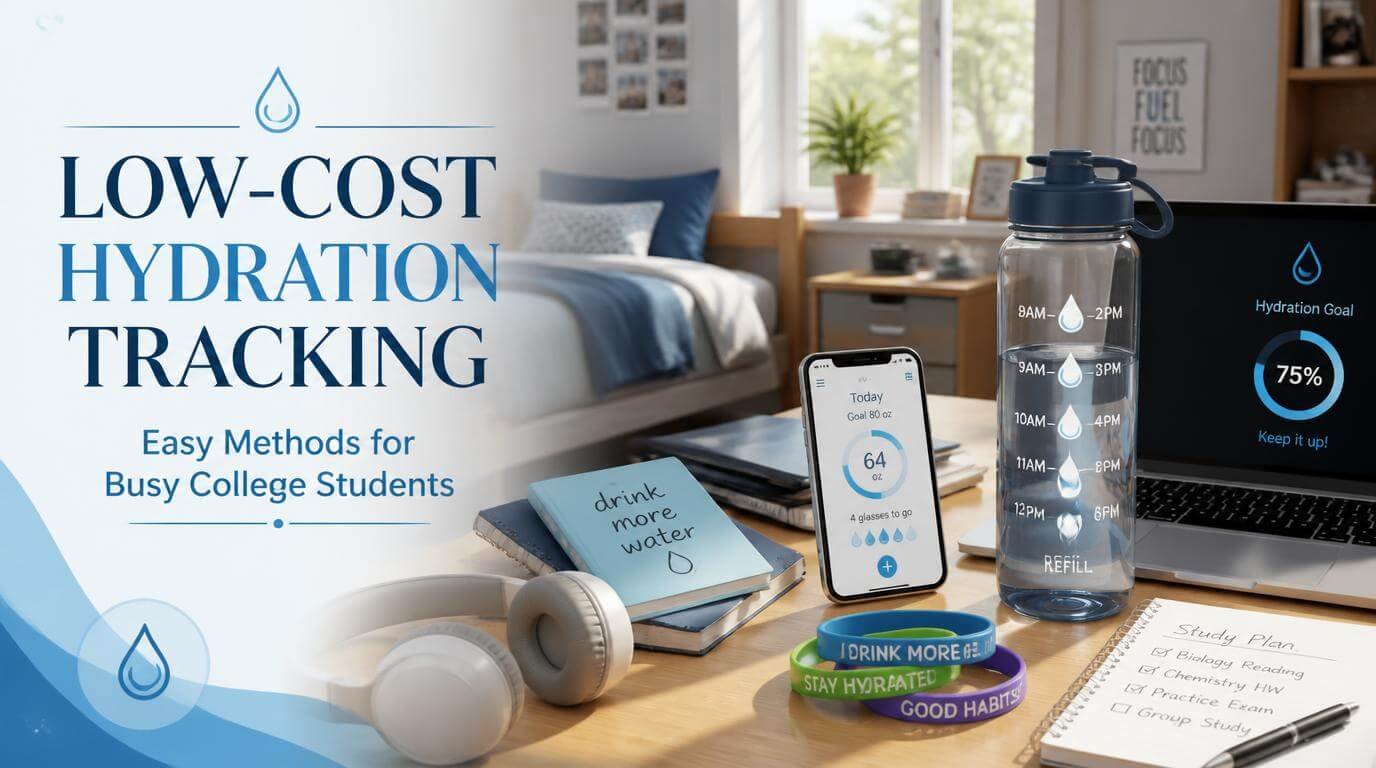
You’ve probably seen those expensive motivational water bottles with time markers down the side. You don’t need to spend $25 on one. Grab a cheap clear bottle from Dollar Tree and a Sharpie. Write time stamps down the side yourself: 9 AM, 11 AM, 1 PM, and so on.
I made mine during a boring Sunday afternoon, and it lasted the entire semester. The time markers give you a built-in schedule without needing to think. When you glance down and see you’re behind, you just chug a little extra. Total cost: about $1.25.

4. The Tally Method in Your Notes App
If you already take notes on your phone or laptop, just add a quick tally section at the top of your daily page. Every time you drink a glass or finish a bottle, add a mark. That’s it. No new app to download, no extra tool to carry.
I did this in my Google Keep for about three months straight. Having the tally right next to my to-do list kept hydration on my radar alongside assignments and deadlines. It also let me look back at previous days and spot patterns, like how I consistently drank almost nothing on Tuesdays because my schedule was packed back to back. Once I noticed that, I started pre-filling a bottle the night before and throwing it in my bag.
5. Buddy System Accountability
One of the best low cost hydration tracking methods for busy college students doesn’t involve any product at all. Find a friend, roommate, or classmate and agree to check in with each other about water intake. My roommate and I used to send each other a quick text after every bottle: just a water emoji. No words needed.
It turned into a funny little competition most days. Neither of us wanted to be the one who only sent two emojis by 5 PM. The social pressure was light but real, and it kept both of us on track through finals week when self-care usually falls apart completely.

6. Reusing a Marked Gallon Jug
Fill a gallon jug every morning, keep it in your dorm, and aim to empty it by the end of the day. You can grab one for under $2 at any grocery store, and reusing it makes the cost basically zero over time.
I wrote encouraging (and slightly aggressive) messages on mine with a dry-erase marker. Things like “You better be halfway done by lunch” at the middle line. Seeing that jug sitting on my desk was a constant visual reminder. Plus, when you actually finish the whole thing, the sense of accomplishment hits different. Fair warning though: you will be making frequent bathroom trips. Plan accordingly between classes.

7. Setting Phone Alarms as Hydration Reminders
Sometimes the most effective method is the most obvious one. Set recurring alarms on your phone every 90 minutes to two hours with a label like “drink water now.” This doesn’t cost a cent and works on every phone, no special app required.
I used this method during my junior year when my class schedule was unpredictable and I couldn’t rely on routine. The alarm would go off, I’d take a few big sips, and dismiss it. The whole interaction lasted five seconds. Some people find alarms annoying, and honestly, that’s kind of the point. If it bugs you enough, you start drinking water before the alarm fires just to avoid hearing it.
8. Tracking with a Simple Habit Tracker Printable
If you’re someone who prefers paper over screens, free printable habit trackers are everywhere online. Sites like Pinterest and Template.net have dozens of options you can print at your campus library for free or a few cents per page. Just add “water” as one of your daily habits and color in a box each time you hit your goal.
I kept a printed tracker taped to my mini fridge for an entire semester. There was something deeply satisfying about filling in that little square before bed. It also made patterns obvious at a glance. If I saw three empty boxes in a row from last week, I knew I needed to step it up. Analog tracking feels old school, but it works especially well if you’re the type who already uses planners or bullet journals.
9. Using Your Meal Times as Built-In Checkpoints
You’re already eating meals (hopefully), so attach your water tracking to something you’re doing anyway. Make it a rule: drink a full glass before every meal and one with every meal. That alone gets you to six glasses a day minimum without any tracking tool at all.
This habit stacking approach works because it doesn’t ask you to remember something new. You just piggyback hydration onto an existing behavior. I found this especially helpful on weekends when my routine completely collapsed and I’d go hours without thinking about water. Breakfast, lunch, dinner, those three anchors kept me from totally falling off.
Low Cost Hydration Tracking Methods for Busy College Students: Which One Should You Pick?
Honestly, the best method is whichever one you’ll actually stick with for more than a week. I’ve tried every single method on this list at different points in college, and they all work when you commit. If you love your phone, go with a free app or alarms. If you’re more visual, grab that dollar store bottle and a Sharpie. The rubber band trick is perfect if you want zero setup.
My personal combo that lasted the longest was a time-marked bottle during the day and a gallon jug in my dorm at night. That dual approach covered both my on-campus hours and my evening study sessions. But I also know people who thrived purely on the buddy system because the social element kept them engaged. The key is picking one method, trying it for two weeks, and adjusting from there. Don’t overthink it.
Frequently Asked Questions
How much water should a college student drink per day?
Most health guidelines suggest about eight 8-ounce glasses daily, roughly half a gallon. But your needs change based on activity level, climate, and how much coffee you’re pounding. A good baseline is to drink enough that your urine stays light yellow. If it looks like apple juice, you’re behind.
Are free hydration apps accurate enough to rely on?
Free apps like Plant Nanny and My Water are solid for basic tracking. They log what you tell them, so accuracy depends on you actually inputting your intake. They won’t measure for you, but they keep a running total and send reminders. For most college students, that’s more than enough to build a consistent habit.
What are some low cost hydration tracking methods that don’t require a phone?
Rubber bands on a water bottle, a time-marked bottle with Sharpie marks, a printed habit tracker, and using meal times as checkpoints all work without a phone. These analog methods are great if you’re trying to reduce screen time or just prefer something tangible you can see throughout the day.
Does coffee count toward my daily water intake?
Technically yes, coffee does contribute to your fluid intake. But caffeine has a mild diuretic effect, so it’s not as hydrating as plain water. I wouldn’t count coffee as a 1:1 replacement. Think of it as partial credit. For every cup of coffee, try to follow it with at least half a glass of water.
How do I remember to drink water during long study sessions?
Set a phone alarm for every 90 minutes, keep a filled bottle on your desk, or use the rubber band method. Having water physically visible in front of you makes a huge difference. I also found that drinking through a straw made me consume more without even noticing, so a cheap reusable straw is a worthwhile investment.
Conclusion
Staying hydrated in college doesn’t require fancy gadgets or monthly subscriptions. A Sharpie, a rubber band, or a free app can do the job just fine when you actually commit. What’s your go-to method for remembering to drink water during a packed day?