
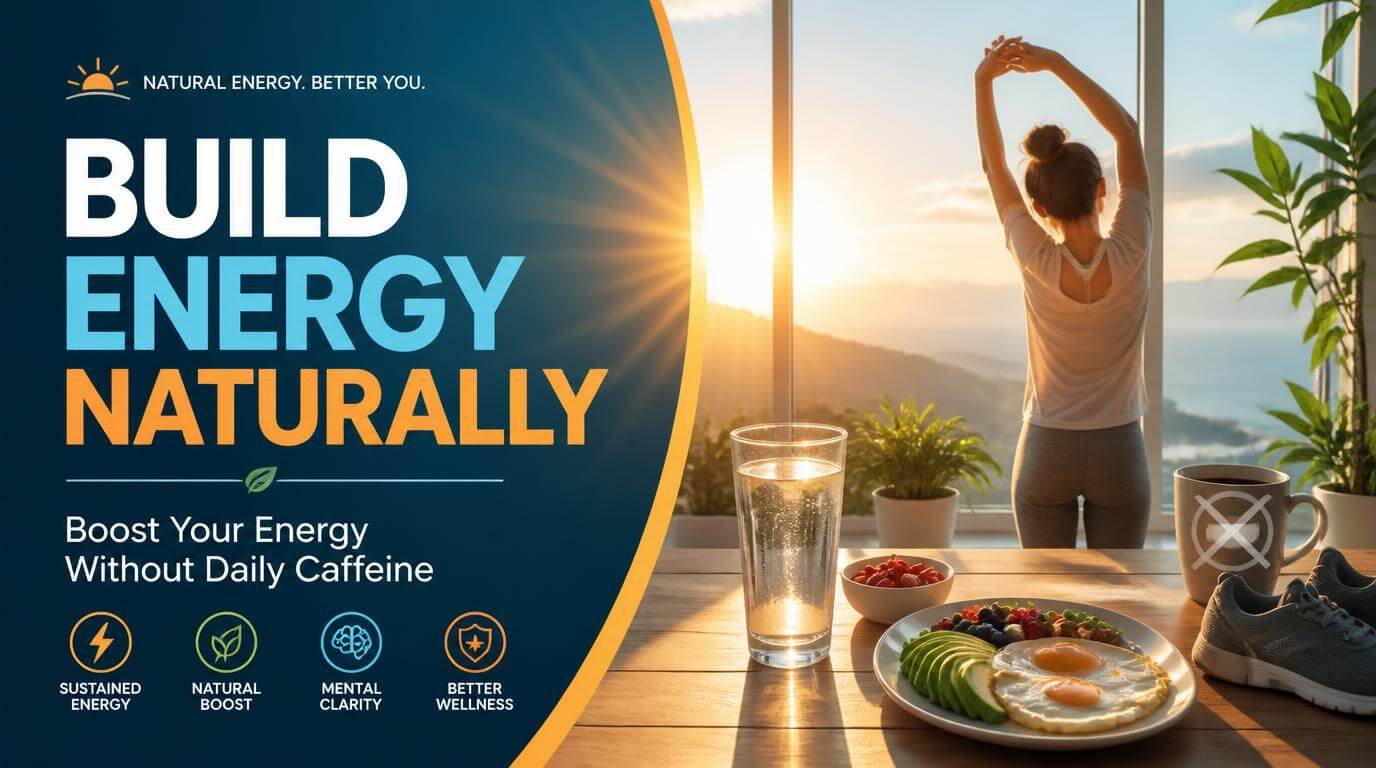
I spent years figuring out how to build energy naturally without relying on caffeine daily, and honestly, the answer wasn’t what I expected. It wasn’t a single magic supplement or a trendy morning routine from TikTok. It was a handful of boring, unsexy habits that compounded over time. I used to drink four cups of coffee before noon and still crash by 2 PM. That cycle broke me down until I finally changed my approach completely.
Why Caffeine Stops Working (And Starts Hurting)
Your body builds a tolerance to caffeine faster than you think. After about two weeks of daily use, that cup of coffee isn’t giving you energy anymore. It’s just bringing you back to baseline, the level of alertness you’d have naturally without it. I learned this the hard way when I realized my fourth espresso wasn’t doing anything except making my hands shake.
Caffeine also messes with your adenosine receptors. Adenosine is the chemical your brain produces to signal tiredness, and caffeine blocks those receptors temporarily. But your brain compensates by creating more receptors over time. So you need more caffeine to get the same effect. It’s a hamster wheel. And the withdrawal headaches? Brutal. I had a three-day migraine the first time I tried cutting back cold turkey.
The real kicker is what caffeine does to your sleep architecture. Even if you fall asleep fine after an afternoon coffee, studies from the Journal of Clinical Sleep Medicine show it reduces your deep sleep stages. Less deep sleep means less recovery, which means you wake up more tired, which means you reach for more caffeine. See the pattern?
Fix Your Sleep First (Everything Else Is Secondary)
Nothing on this list matters if your sleep is garbage. I know that sounds harsh, but I spent months trying supplements and cold plunges while sleeping five hours a night. Shocking no one, I still felt terrible.
Here’s what actually moved the needle for me. I set a consistent wake time, even on weekends. Not a bedtime, a wake time. My body started getting sleepy at the right hour naturally once I locked in a 6:30 AM alarm seven days a week. It took about ten days to adjust, and those ten days were rough, but it worked.
I also kicked screens out of the bedroom entirely. My phone charges in the kitchen now. I bought a $12 Casio alarm clock from Amazon, and it’s one of the best purchases I’ve ever made. The temptation to scroll at 11 PM vanished overnight. My sleep quality, measured by my Oura Ring, improved by about 15% in the first month.

Temperature Matters More Than You Think
Keep your bedroom cold. Like, 65 to 67 degrees Fahrenheit cold. Your core body temperature needs to drop for you to fall into deep sleep, and a warm room fights that process. I started sleeping with a fan on and lighter blankets, and the difference in how I felt by morning was noticeable within a week.
How to Build Energy Naturally with Morning Light Exposure
This one felt almost too simple to work, but the science behind it is solid. Getting bright light in your eyes within 30 to 60 minutes of waking up sets your circadian rhythm for the entire day. It triggers a cortisol pulse (the good, healthy kind) that tells your body it’s go time.
I started taking a 10-minute walk outside every morning before I did anything else. No sunglasses, no checking my phone, just walking. On cloudy days, I still went out because even overcast light is significantly brighter than indoor lighting. We’re talking 10,000 lux outside versus maybe 500 lux in your living room.
Dr. Andrew Huberman from Stanford has talked extensively about this, and after trying it myself for three months, I’m a full convert. My morning grogginess went from lasting until 10 AM to clearing up by 7:15. That alone replaced what my first cup of coffee used to do.

Move Your Body Before You Feel Ready
Exercise is the most effective natural energy booster that nobody wants to hear about. I get it. When you’re tired, the last thing you want to do is move. But even a 20-minute walk raises your heart rate enough to increase blood flow to your brain and release endorphins that genuinely wake you up.
I’m not talking about crushing a CrossFit WOD at 5 AM. I’m talking about movement. A brisk walk. Some bodyweight squats. A few minutes of stretching. Anything that gets your blood pumping.
What surprised me most was how afternoon exercise specifically replaced my need for that 2 PM coffee. I started doing a 15-minute walk after lunch, and my afternoon slump basically disappeared. A 2023 study published in Physiology & Behavior found that just ten minutes of stair walking gave participants more energy than a 50mg caffeine dose. Ten minutes. Stairs. That’s it.

Eat for Sustained Energy, Not Quick Spikes
Most people eat in a way that practically guarantees an energy crash. A bagel with cream cheese for breakfast, a sandwich on white bread for lunch, and then they wonder why they’re dragging by mid-afternoon. Your blood sugar spikes, insulin floods in, and you crash hard.
I restructured my meals around three principles: protein at every meal, healthy fats to slow digestion, and complex carbs instead of refined ones. Breakfast went from cereal to eggs with avocado and sweet potato. Lunch became a big salad with grilled chicken, olive oil, nuts, and quinoa.
The difference was staggering. My energy stopped coming in waves and started feeling more like a steady hum throughout the day. I also stopped eating anything with added sugar before noon, which was harder than quitting coffee honestly, but it eliminated that mid-morning fog completely.
Hydration Is Half the Battle
Dehydration mimics fatigue so closely that most people can’t tell the difference. I started drinking 16 ounces of water immediately after waking up, before food, before anything. I keep a 32-ounce Nalgene bottle on my desk and aim to finish it twice before 3 PM. On days I fall short, I feel it. The tiredness creeps back in, and it’s easy to mistake it for needing caffeine when really you just need water.
Cold Exposure Actually Works (When You Do It Right)
I was skeptical about this one for a long time. Cold showers felt like internet bro-science to me. But after trying a 60-second cold rinse at the end of my shower every morning for a month, I changed my mind.
The cold triggers a norepinephrine release, a neurotransmitter that increases alertness and focus. Research from the European Journal of Applied Physiology shows cold exposure can increase norepinephrine by up to 300%. That’s not a subtle effect. You feel it immediately. That gasp when the cold water hits you? Your brain just lit up like a switchboard.
I’m not doing ice baths. I’m not buying a Cold Plunge tub for $5,000. I’m turning my shower handle to cold for the last 30 to 90 seconds. Free, fast, and ridiculously effective. FYI, you do get used to it after about two weeks, and some mornings I actually look forward to it now.

Strategic Breathing Techniques for Instant Alertness
When I need energy right now and I don’t have time for a walk or a cold shower, breathwork is my go-to. Specifically, the physiological sigh, which is a double inhale through the nose followed by a long exhale through the mouth.
But for real energy boosts, I use cyclic hyperventilation, the kind popularized by Wim Hof. Thirty deep breaths, in through the nose, out through the mouth, followed by a breath hold. Two to three rounds of this, and I feel like I just had a double espresso. It takes five minutes and costs nothing.
I also keep a box breathing practice for stressful afternoons. Four seconds in, four seconds hold, four seconds out, four seconds hold. It doesn’t amp you up like cyclic breathing does, but it clears the brain fog that usually sends me hunting for caffeine.
Supplements That Actually Have Evidence Behind Them
I’m not going to list twenty supplements here because most of them are garbage. But a few have legitimate research backing their energy-boosting claims, and I’ve personally tried all of them.
Creatine monohydrate isn’t just for gym bros. It supports ATP production in your brain, not just your muscles. I take 5 grams daily mixed into my morning water. After about three weeks, I noticed improved mental clarity and less afternoon fatigue. It’s dirt cheap, too. A tub of Optimum Nutrition creatine costs about $15 and lasts two months.
Rhodiola rosea is an adaptogenic herb that helps your body handle stress without the jittery side effects of stimulants. I take 200mg in the morning. A 2012 review in BMC Complementary and Alternative Medicine found it reduced mental fatigue and improved cognitive function in multiple trials. It’s subtle, not a lightning bolt, but over time you notice you’re just handling your day better.
B-complex vitamins round out my stack. If you’re even mildly deficient in B12 or B6, your energy production takes a hit at the cellular level. A simple blood test can tell you where you stand, and supplementing is easy and affordable.
Build Energy Naturally by Managing Your Stress Load
Chronic stress is an energy vampire. Cortisol stays elevated, your sleep suffers, your digestion slows, and your body stays in fight-or-flight mode all day. You can eat perfectly, sleep eight hours, and exercise daily, but if your stress is unmanaged, you’ll still feel drained.
I started a journaling practice, and before you roll your eyes, hear me out. Five minutes in the morning, I write down three things I need to get done and one thing I’m worried about. Getting the worry out of my head and onto paper takes away about half its power. It sounds too simple, but cognitive behavioral therapy research supports exactly this mechanism.
I also set hard boundaries around my work schedule. No emails after 7 PM. No Slack on weekends. The world didn’t end. My energy on Monday mornings improved dramatically because I actually rested during my time off instead of half-working the whole weekend.
FAQs
How long does it take to build energy naturally after quitting caffeine?
Most people feel noticeably better within 7 to 14 days after cutting caffeine. The first 3 to 5 days are the hardest because withdrawal symptoms like headaches and irritability peak during that window. After about two weeks, your natural energy rhythms start to stabilize. Within a month, most people report feeling more consistent energy than they ever had with coffee.
Can I still drink coffee occasionally while building natural energy?
Absolutely. The goal isn’t to demonize caffeine forever. It’s about not depending on it every single day. I still enjoy a cup of coffee once or twice a week, usually on weekends or before a tough workout. When you use caffeine strategically instead of habitually, it actually works better because your tolerance stays low.
What’s the single most impactful change for natural energy?
Fixing your sleep. Nothing else comes close. You can stack every supplement, breathing technique, and exercise habit on top of bad sleep and still feel terrible. Consistent wake times and a cool, dark bedroom gave me more energy than any other change I made, and I tried a lot of things before landing on that truth.
Are energy drinks worse than coffee for daily energy?
IMO, yes. Most energy drinks contain not just caffeine but also excessive sugar, artificial sweeteners, and other stimulants like taurine and guarana that compound the crash effect. A standard Monster has 160mg of caffeine plus 54 grams of sugar. That’s a recipe for a spike-and-crash cycle that’s even more aggressive than coffee alone.
Does napping help build energy naturally without relying on caffeine daily?
Short naps can be incredibly helpful. A 10 to 20 minute nap between 1 and 3 PM can restore alertness without interfering with nighttime sleep. The key is keeping it short. Anything over 30 minutes pushes you into deeper sleep stages, and waking up from those leaves you groggier than before. Set an alarm and keep it tight.
Conclusion
Building real, lasting energy without caffeine isn’t about finding one perfect hack. It’s about stacking small, consistent habits that support how your body actually works. Every change I made felt small on its own, but together they completely replaced my dependence on coffee. What’s the one habit from this list you’d be willing to try first?